Organising a pickleball tournament can be an excellent way for a club to bring players together and create a stronger competitive community.
But a successful event involves much more than putting names into a draw.
You need to choose a format, register players, organise matches, manage courts, communicate updates, collect results, and keep the tournament moving.
For small events, these tasks can be handled manually. As participation grows, however, spreadsheets and messaging apps can quickly become difficult to manage.
A clear process—and the right pickleball tournament management tools—can make the entire experience easier for clubs, coaches, and competition organisers.
Start by deciding what kind of event you want to run.
Think about your players and the purpose of the tournament.
Are you organising a serious club championship, a competitive weekend event, or a more relaxed social competition?
Your answer will determine the format, eligibility rules, scheduling, and scoring system.
You should establish the basic details before inviting players:
Clear rules at the beginning prevent confusion once matches start.
The format has a major effect on the tournament experience.
A knockout format is suitable for a traditional championship.
Players progress through rounds based on their results, while losing participants are eliminated according to the rules.
It is straightforward and creates a clear path toward a final.
A box league gives players several matches within a defined group.
This can be useful when you want participants to play more than one match rather than potentially leaving the competition after a single loss.
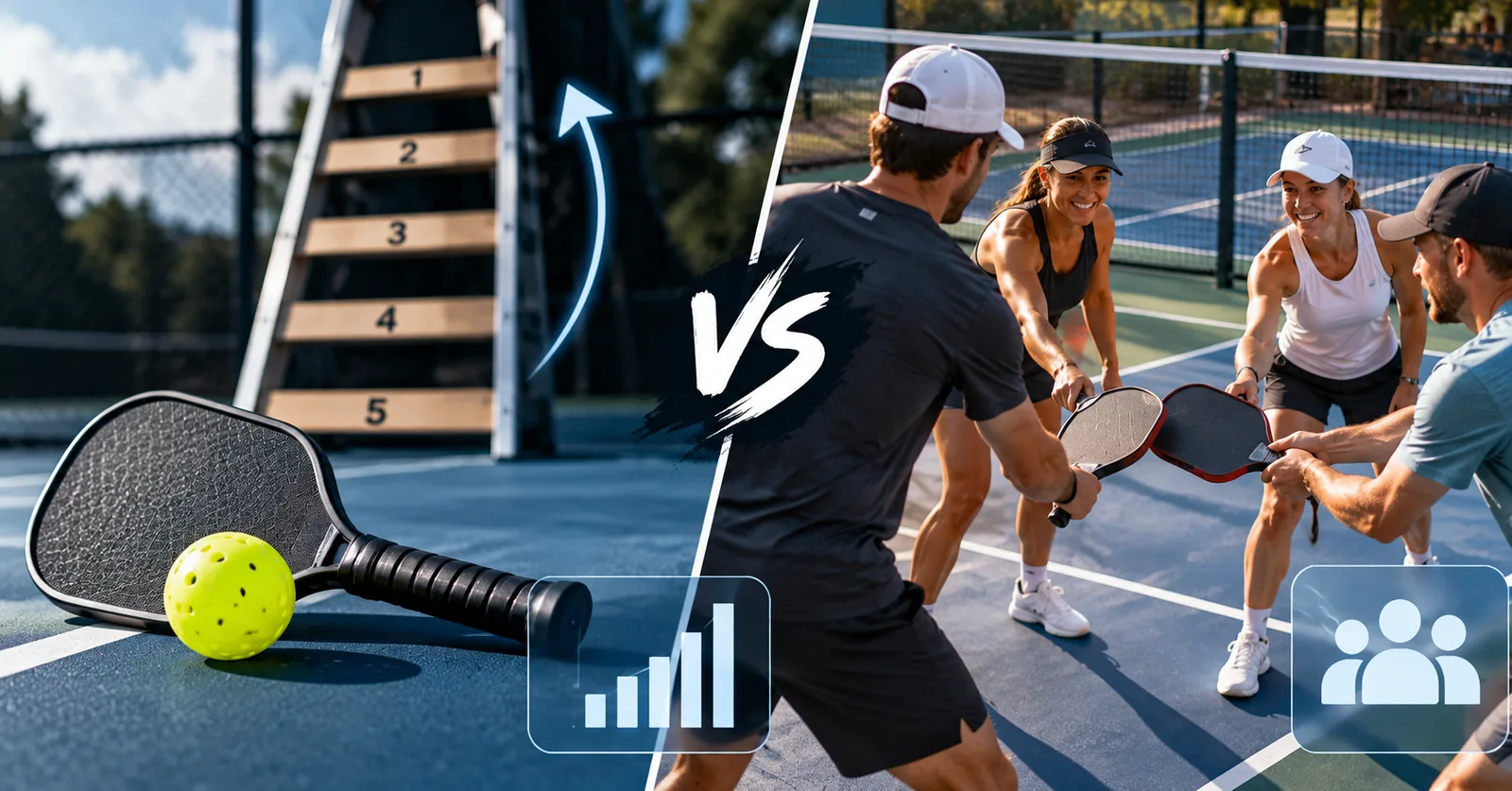
A ladder is designed for ongoing ranking-based competition.
Players can challenge others and work their way up the rankings.
It is generally more suitable for a continuing club competition than a single-day tournament.
An Americano is a popular social competition format where players rotate partners and opponents across multiple rounds.
It can be particularly useful for clubs that want a competitive event that also encourages players to meet different members.
The best format depends on the size of your event, available courts, player expectations, and the amount of time available.
Matchspace supports knockout tournaments, box leagues, ladder leagues, and Americanos, giving clubs different ways to organise racquet-sports competitions.
Once the format is decided, open registration.
Avoid making players contact the organiser through several different channels.
A central registration process should clearly show what the tournament is, who can participate, how much it costs if applicable, and what players need to do.
For doubles competitions, explain whether participants must register with a partner or whether the club will create pairs.
You should also collect only the information you actually need.
Too many registration requirements can create unnecessary friction.
Digital registration also makes it easier to maintain an accurate participant list and prepare the competition structure.
After registration closes, organise participants into the appropriate competition.
If you have a wide range of abilities, consider creating divisions.
For example, a club might offer beginner, intermediate, and advanced categories.
This helps produce more competitive matches and can make the event more enjoyable for everyone.
For doubles competitions, organisers should also confirm the final teams before creating the draw.
The goal is to create a tournament structure that is competitive without becoming unnecessarily complicated.
Now turn your player list into actual matches.
For a knockout tournament, this means creating the bracket.
For a box league, it means placing players or teams into groups.
For an Americano, it means creating rounds with rotating partners and opponents.
This is an area where digital tournament software can save significant time.
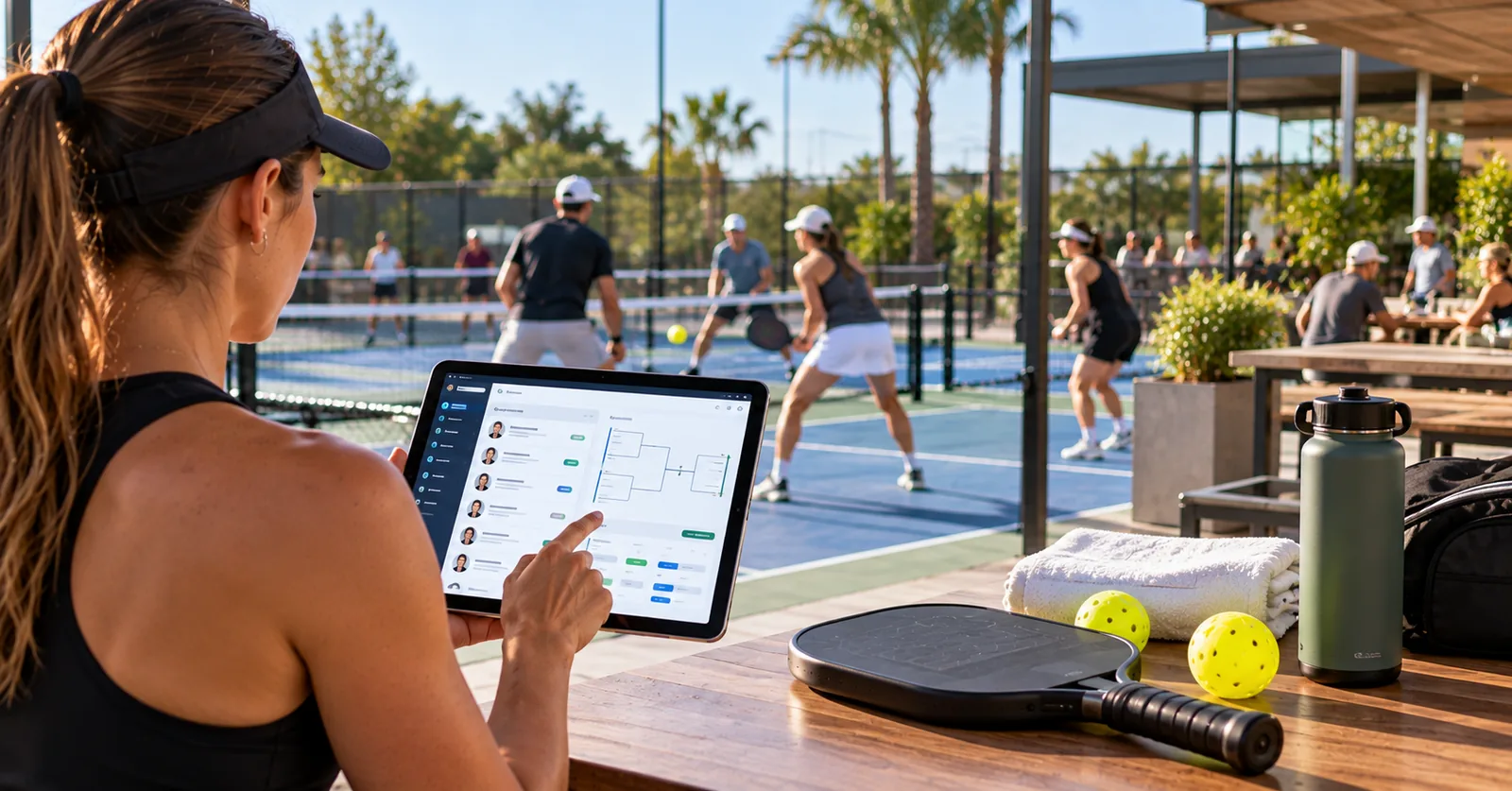
Instead of manually creating and updating every match, a competition platform can help organise participants and track the competition as results come in.
The more players you have, the more valuable this becomes.
Court availability can determine whether your tournament runs smoothly.
Before confirming the schedule, calculate how many matches can realistically be played during the available time.
Consider:
Avoid creating an unrealistic schedule just to fit everything into one day.
For longer competitions, giving players flexibility to arrange matches may be more practical.
For a one-day event, a structured schedule is usually more appropriate.
Players should never have to guess when or where they are supposed to play.
Before the tournament starts, explain how they will receive match information and how scheduling will work.
During the event, they should be able to quickly find their opponent, match details, and any relevant updates.
A central platform can make this easier.
Matchspace allows players to view competition information, communicate with opponents, RSVP to matches, and receive notifications and reminders.
This reduces the amount of information organisers need to repeat individually.
For tournaments that run over several days or weeks, players can often arrange their own matches.
The organiser sets the competition rules and deadlines, while participants agree on a suitable time.
This approach can significantly reduce administrative work.
Instead of an organiser trying to coordinate every player's availability, participants communicate directly.
It also gives players more flexibility.
For example, two players who are both unavailable during normal club hours can find another suitable time without requiring the organiser to rearrange the entire tournament.
After every match, the result needs to be recorded.
Avoid relying on players to send scores through multiple messaging channels.
A better approach is to let them submit the result directly through the tournament platform.
Matchspace allows players to submit and verify scores through the app.
This creates a simple workflow:
Play → Submit result → Update competition → Continue
For organisers, it reduces manual data entry and makes it easier to see which matches are complete.
Once the tournament begins, organisers should monitor progress without becoming responsible for every small detail.
Look for incomplete matches, delayed results, scheduling problems, or players who have not responded.
If several matches are falling behind, send a general reminder before the problem becomes serious.
Automated notifications can help with this.
Matchspace provides reminders, notifications, broadcasts, and competition updates that help clubs keep participants informed throughout the event.
Players naturally want to follow the tournament.
They want to know who has won, who is progressing, and where they stand.
Make results accessible instead of requiring players to ask the organiser.
For knockout tournaments, players can follow progression through the rounds.
For box leagues, they can monitor standings.
For ladders, they can track ranking changes.
For Americanos, they can follow the leaderboard as rounds are completed.
This visibility creates excitement and can keep players engaged throughout the event.
No tournament goes exactly according to plan.
Matches may be postponed. Players may withdraw. Courts may become unavailable.
Establish procedures for these situations before the competition starts.
For example, specify how much notice is required for a cancellation and what happens if a match cannot be completed by the deadline.
You should also establish how score disputes will be handled.
Clear procedures prevent organisers from having to make inconsistent decisions during the tournament.
A tournament should feel like a club event, not simply a collection of fixtures.
Small touches can make a difference.
Share competition updates, celebrate completed rounds, recognise impressive performances, and keep participants informed about what is happening.
Digital achievements and rankings can also add motivation.
Matchspace provides player profiles, rankings, achievements, and digital trophies that help recognise progress and milestones.
These features can encourage players to remain involved beyond their individual matches.
When the final matches are complete, officially close the competition.
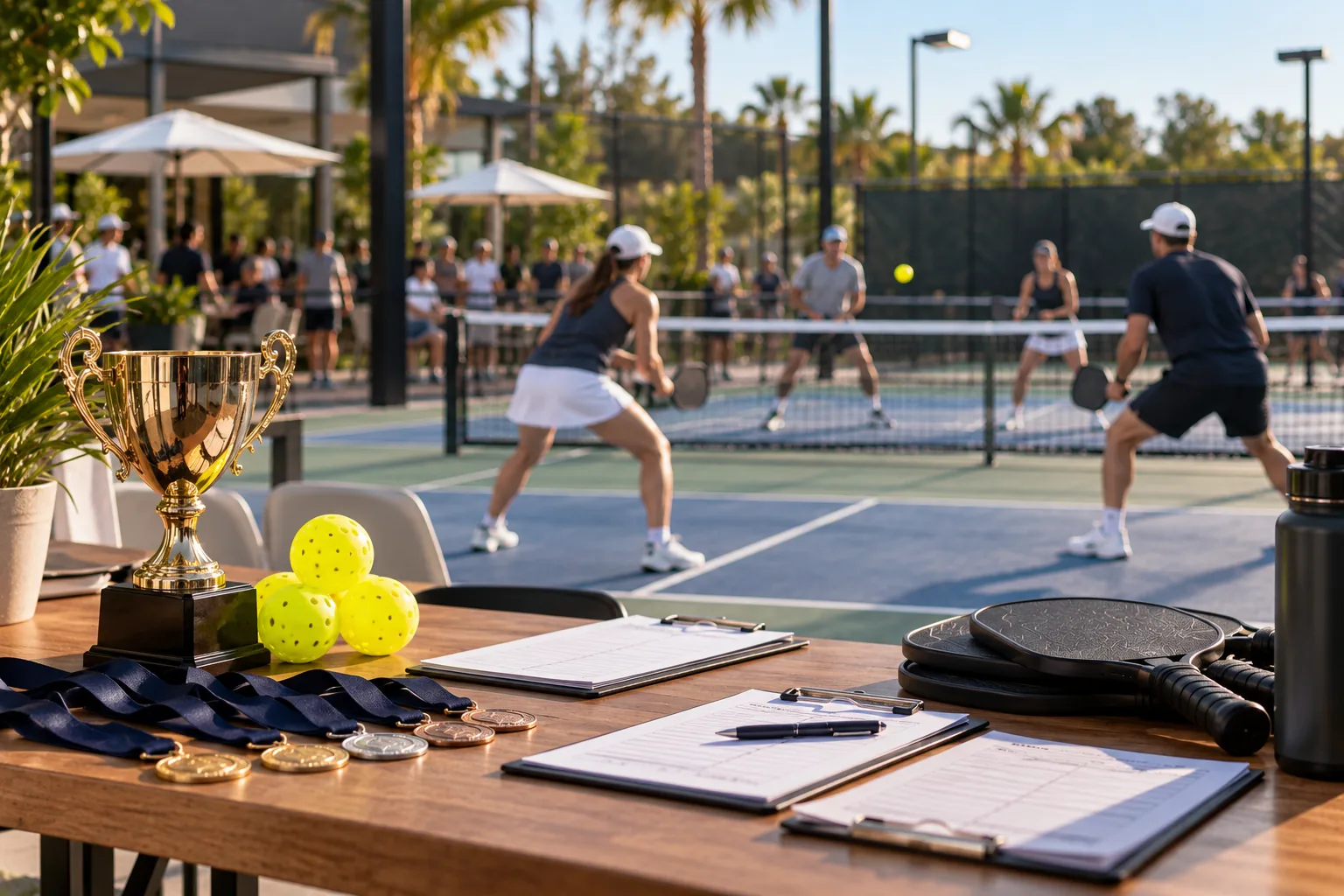
Share the final standings and recognise the winners.
Depending on the format, you might also recognise finalists, division winners, or notable achievements.
For a club, this is also an opportunity to promote the next competition.
Matchspace can compile competition results and share winner summaries through the club feed, helping organisers close events with less manual administration.
Matchspace is designed for racquet sports clubs, coaches, competition organisers, and players.
For pickleball, it provides a central environment for managing competitions, player participation, scheduling, results, communication, and competition progress.
Clubs can use different formats, including knockout tournaments, box leagues, ladder leagues, and Americanos.
Players can enter competitions, communicate with opponents, arrange matches, submit results, and follow their progress.
Organisers can create competitions, monitor activity, send updates, and reduce the repetitive work involved in manually maintaining spreadsheets and messaging groups.
The platform's value is not just automation.
It helps connect the different stages of the competition so that registration, matches, results, and communication are part of one experience.
Before launching your event, make sure you have:
With these elements in place, the tournament becomes much easier to manage.
The timeline depends on the size of the event. Small club tournaments can be organised relatively quickly, while larger events require more time for registration, court planning, scheduling, and communication.
Knockout tournaments are useful for traditional championships, while box leagues provide multiple matches. Ladders work well for ongoing competition, and Americanos are useful for social events with rotating partners.
A dedicated competition platform can manage registration, matches, results, communication, rankings, and notifications in one place, reducing the need for multiple spreadsheets.
For competitions lasting several days or weeks, allowing players to arrange their own matches can reduce administration and provide more scheduling flexibility.
Players can submit their scores directly through competition software. This reduces manual data entry and helps keep competition results current.
Yes. Matchspace supports competition formats including knockout tournaments, box leagues, ladder leagues, and Americanos, along with tools for scheduling, results, communication, and player engagement.
Organising a pickleball tournament becomes much easier when every stage has a clear process.
Start with the right format, make registration simple, plan realistic schedules, give players responsibility where possible, and make score reporting and communication straightforward.
Technology can then handle much of the repetitive administration.
Matchspace helps clubs, coaches, organisers, and players manage pickleball competitions in one connected environment, from registration and match scheduling to results and final standings.
With the right structure and tools, your club can run a pickleball tournament that feels organised to players without becoming an administrative headache for the people running it.
Start your free trial now and book a quick demo so we can help you set up your first competition.