Pickleball clubs are growing, and with more players comes a greater need for organised competition.
Running a tournament may seem straightforward at first. Create a player list, organise matches, record scores, and announce the winners. But as participation increases, these tasks can quickly become difficult to manage manually.
Spreadsheets, messaging groups, emails, and separate registration forms can leave organisers constantly updating information and chasing players for results.
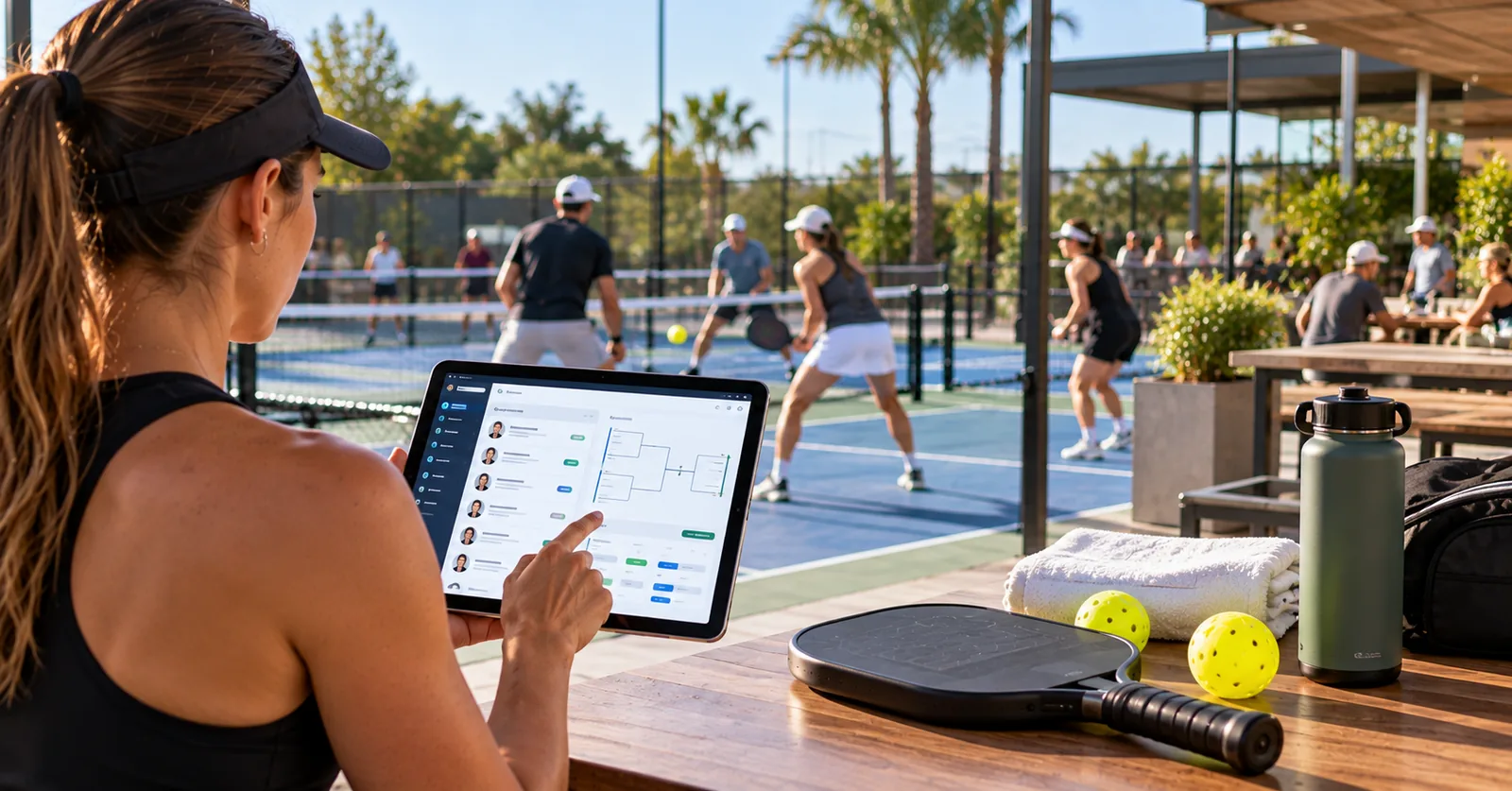
The right pickleball tournament software can bring these activities together.
For clubs, coaches, and competition organisers, the goal is not simply to digitise a tournament. It is to create a smoother process from player registration through final results while giving players an easier way to participate.
The best platform should solve real problems rather than simply offer a long list of features.
A club should look for software that makes it easy to create competitions, manage participants, organise matches, collect scores, and keep players informed.
It should also work for different types of pickleball competition.
Some clubs may focus on structured tournaments, while others may run leagues, ladders, or social events. A flexible platform can help clubs support different playing preferences without creating separate administrative systems.
Spreadsheets remain useful for simple competitions.
If a club has a small number of players and only a few matches, an organiser may be able to manage everything manually.
The problem appears when competitions become larger or more frequent.
An organiser may have one spreadsheet for registration, another for results, and a messaging group for scheduling. Every change then needs to be reflected across different places.
This creates opportunities for errors and makes it harder for players to know which information is current.
Dedicated competition software provides a central place for the competition.
That means less time moving information between tools and more time focusing on the actual event.
Registration is one of the first areas where technology can reduce administrative work.
Players should be able to see an event, understand who it is for, and join without repeatedly contacting the organiser.
For clubs, a central registration process makes it easier to know exactly who is participating.
This is particularly useful when a club offers several competitions at once, such as singles, doubles, mixed doubles, or different skill divisions.
Matchspace supports pickleball competitions and allows clubs to manage both mixed doubles and singles competitions while tracking player rankings and match history.
The result is a cleaner starting point for tournament organisation.
A major consideration when choosing pickleball tournament software is flexibility.
Different clubs have different competition preferences.
Knockout tournaments work well for championships and short competitive events. Players progress through rounds based on their results.
The software should make it easy to manage the bracket and keep progression updated as matches are completed.
Box leagues provide a more continuous form of competition. Players compete against others within their group over a defined period.
This format can encourage regular play without eliminating players after a single loss.
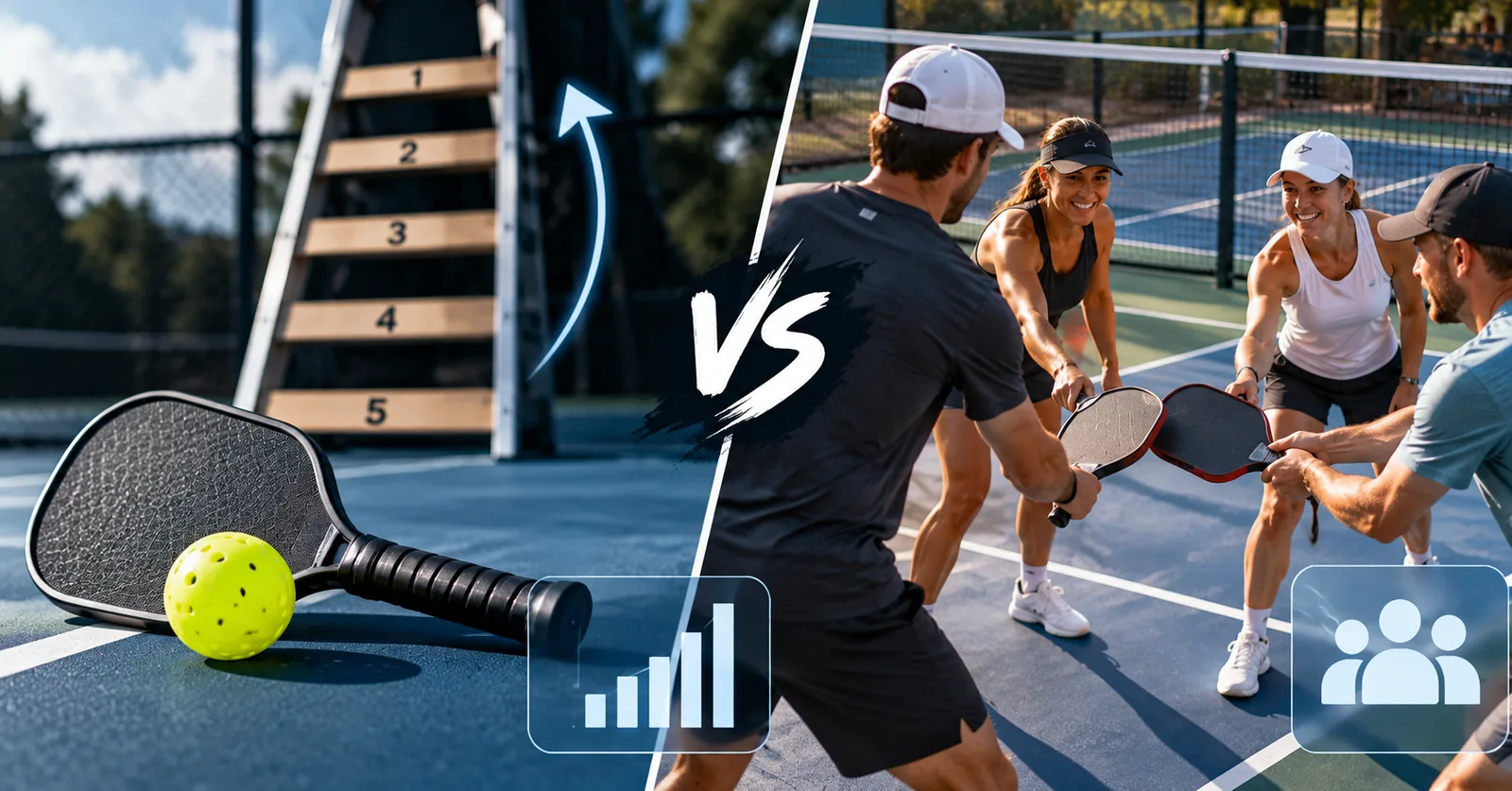
Ladders are useful for clubs that want ongoing ranking-based competition. Players can challenge others and work their way up the rankings.
Some clubs may prefer more flexible formats that encourage players to meet different opponents rather than focusing entirely on rankings.
The important point is that tournament software should fit the club's competition programme rather than forcing every event into one format.
Matchspace supports box, ladder, and knockout competition formats for racquet sports clubs, while also supporting pickleball as part of its broader platform.
Scheduling can become one of the biggest headaches for organisers.
Players have different work schedules, family commitments, and availability. Courts may also be limited, especially during busy periods.
If the organiser has to arrange every match personally, administration can quickly become overwhelming.
A better system allows players to take responsibility for arranging matches where appropriate.
Players can communicate with opponents, agree on a suitable time, and keep the organiser involved only when assistance is required.
Matchspace provides built-in chat, RSVP functionality, and notifications that allow players to arrange games without relying on separate messaging applications.
This changes the organiser's role from coordinating every match to overseeing the competition.
After matches are completed, results need to be recorded.
Manual score collection often creates unnecessary work. Players send results to the organiser, the organiser updates a spreadsheet, and then standings need to be recalculated.
A dedicated platform can simplify this process by allowing players to submit results directly.
Matchspace allows players to submit and verify scores through the app, with results and player progress available through their profiles.
This creates a much cleaner workflow:
Play → Submit score → Update result → Follow competition progress
It also reduces the amount of manual data entry required from club staff or volunteers.
Pickleball players often want to know more than whether they won their latest match.
They may want to see their ranking, previous results, progress, and upcoming matches.
A tournament platform can make this information easier to access.
For clubs, this also creates a clearer picture of player activity.
Matchspace provides player profiles where participants can view upcoming matches, submit results, and track their progress and rankings.
This can make competition participation feel more personal.
Players are not simply appearing on a tournament spreadsheet. They have an ongoing competition profile connected to their club activity.
Tournament communication can quickly become messy when it takes place across several channels.
Players may use WhatsApp for scheduling, email for official announcements, and another system for scores.
A platform with built-in communication can bring these interactions together.
Matchspace includes integrated chat, broadcasts, competition updates, RSVP prompts, and notifications.
This can help players find relevant information more easily and reduce the number of separate messages organisers need to manage.
It also means competition communication stays connected to the competition itself.
Even a well-organised tournament can fall behind if players forget deadlines.
Automated reminders can help keep participants aware of upcoming matches and outstanding actions.
For organisers, this can reduce the need to repeatedly contact individual players.
Useful notifications can include reminders for:
The purpose is not to overwhelm players with notifications. It is to provide timely information that keeps the tournament moving.
A strong club competition should encourage players to return for the next event.
That means software should support engagement as well as administration.
Leaderboards, rankings, achievements, and digital rewards can make competition more motivating.
Matchspace uses digital trophies and achievements to recognise milestones such as wins and ranking progress.
For example, a player might be motivated by reaching a new ranking position or earning recognition for a milestone.
These small features can help turn occasional tournament participation into ongoing club engagement.
Club managers have a broader responsibility than individual competition organisers.
They need to understand what competitions are active, whether players are participating, and whether events are progressing as expected.
A central dashboard can provide this visibility.
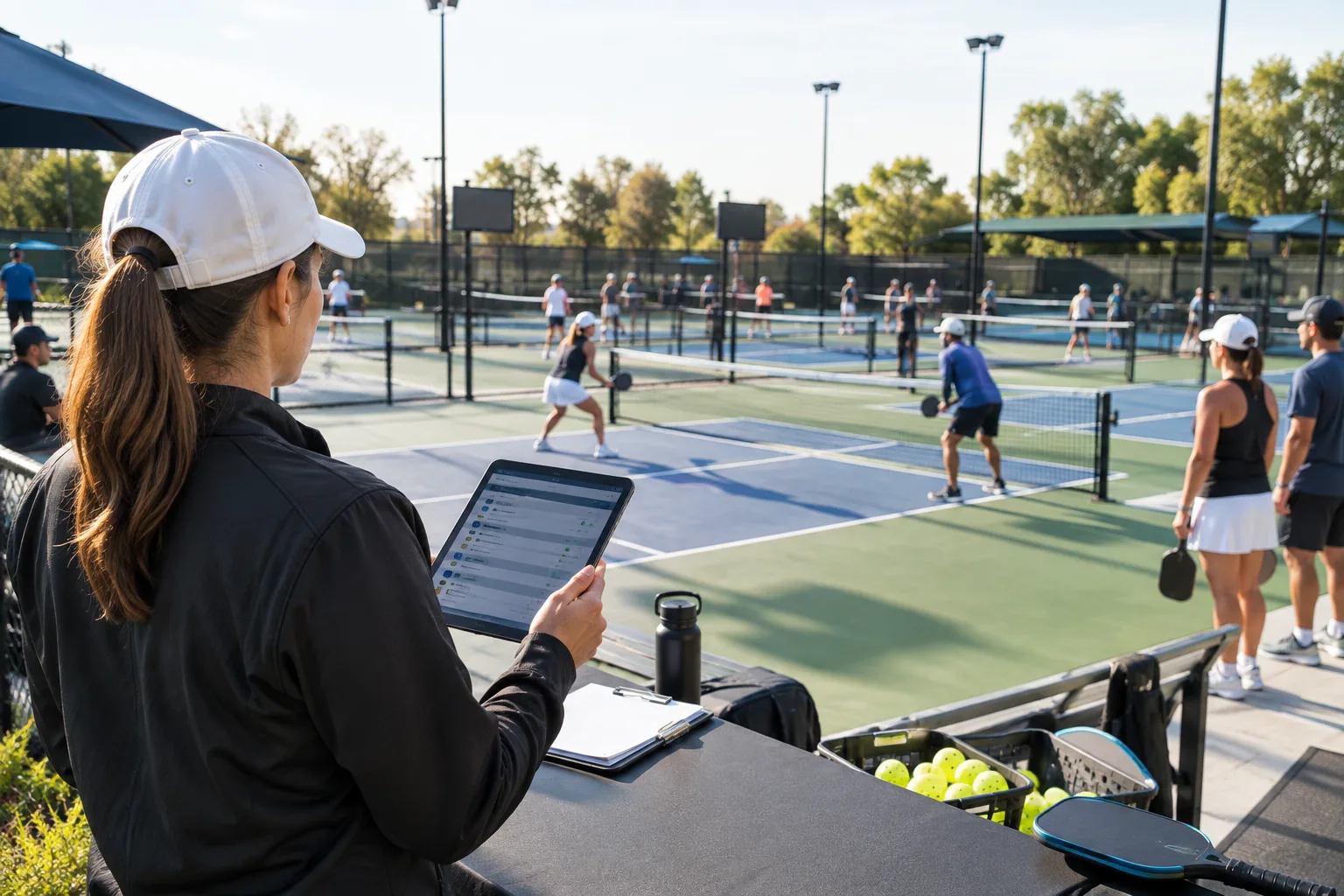
Matchspace provides clubs with a real-time overview of competitions while bringing scheduling, score tracking, result submissions, communication, and competition updates into one environment.
This is particularly useful for clubs running several competitions simultaneously.
Instead of maintaining multiple spreadsheets, managers can oversee activity through a central system.
Coaches can also use pickleball competition software to create more opportunities for match play.
Competitive matches can complement coaching sessions by giving players a chance to apply skills in real situations.
However, coaches should not have to spend hours organising fixtures and chasing scores.
A competition platform can handle much of the routine administration while coaches focus on player development.
Matchspace provides coaches with tools for setting up competitions, tracking matches and results, and sending reminders and updates through the platform.
This can make structured competition easier to include within a club's coaching programme.
Before selecting pickleball tournament software, think about your club's actual needs.
Ask yourself:
How many competitions do we run?
If you organise several events throughout the year, automation becomes more valuable.
How are players currently scheduling matches?
If organisers spend significant time coordinating games, built-in communication and player-led scheduling could make a major difference.
How are scores recorded?
If results are collected manually, direct score submission can reduce administrative work.
Do we need more than tournaments?
If your club also wants ladders, box leagues, or other competition formats, choose software that can support a broader competition programme.
Most importantly, consider ease of use.
The software should be simple for both organisers and players.
Matchspace is designed for racquet sports clubs and supports tennis, pickleball, squash, and padel. Its pickleball tools allow clubs to manage singles and mixed doubles competitions while tracking rankings and match history.
The broader platform brings competition setup, scheduling, results, communication, notifications, and player engagement into one place.
For clubs, this can mean less reliance on spreadsheets and separate messaging platforms.
For players, it means having a more connected way to enter competitions, arrange matches, submit results, and follow their progress.
The platform also supports automatic competition wrap-ups, helping clubs share final results without having to manually prepare every announcement.
Rather than simply replacing a spreadsheet, the aim is to make the entire competition journey easier to manage.
Pickleball tournament software is a digital platform that helps clubs organise players, matches, schedules, scores, rankings, communication, and competition results.
Look for simple registration, competition setup, scheduling, score submission, rankings, communication, notifications, and support for different competition formats.
Yes. Suitable platforms should support doubles as well as singles. Matchspace specifically supports mixed doubles and singles pickleball competitions.
Yes. Matchspace allows players to submit and verify scores through the app, reducing the amount of manual result entry required from organisers.
Yes. Coaches can use competition software to organise match-play opportunities, monitor results, and communicate with players without managing every administrative task manually.
Yes. Even smaller clubs can benefit if volunteers or organisers spend significant time managing registrations, schedules, results, and communication.
Yes. Matchspace supports pickleball alongside other racquet sports and provides tools for managing competitions, player rankings, match history, scheduling, results, and communication.
The best pickleball tournament software should make competition management simpler for clubs without making participation harder for players.
Centralised registration, flexible competition management, player-led scheduling, direct score submission, rankings, communication, and reminders can significantly reduce repetitive administration.
Matchspace brings these capabilities together for racquet sports clubs, including pickleball, while supporting both organisers and players throughout the competition process.
For clubs looking to run more organised pickleball competitions with less manual work, the right digital platform can turn tournament administration into a much smoother part of the club experience.
Start your free trial now and book a quick demo so we can help you set up your first competition.