
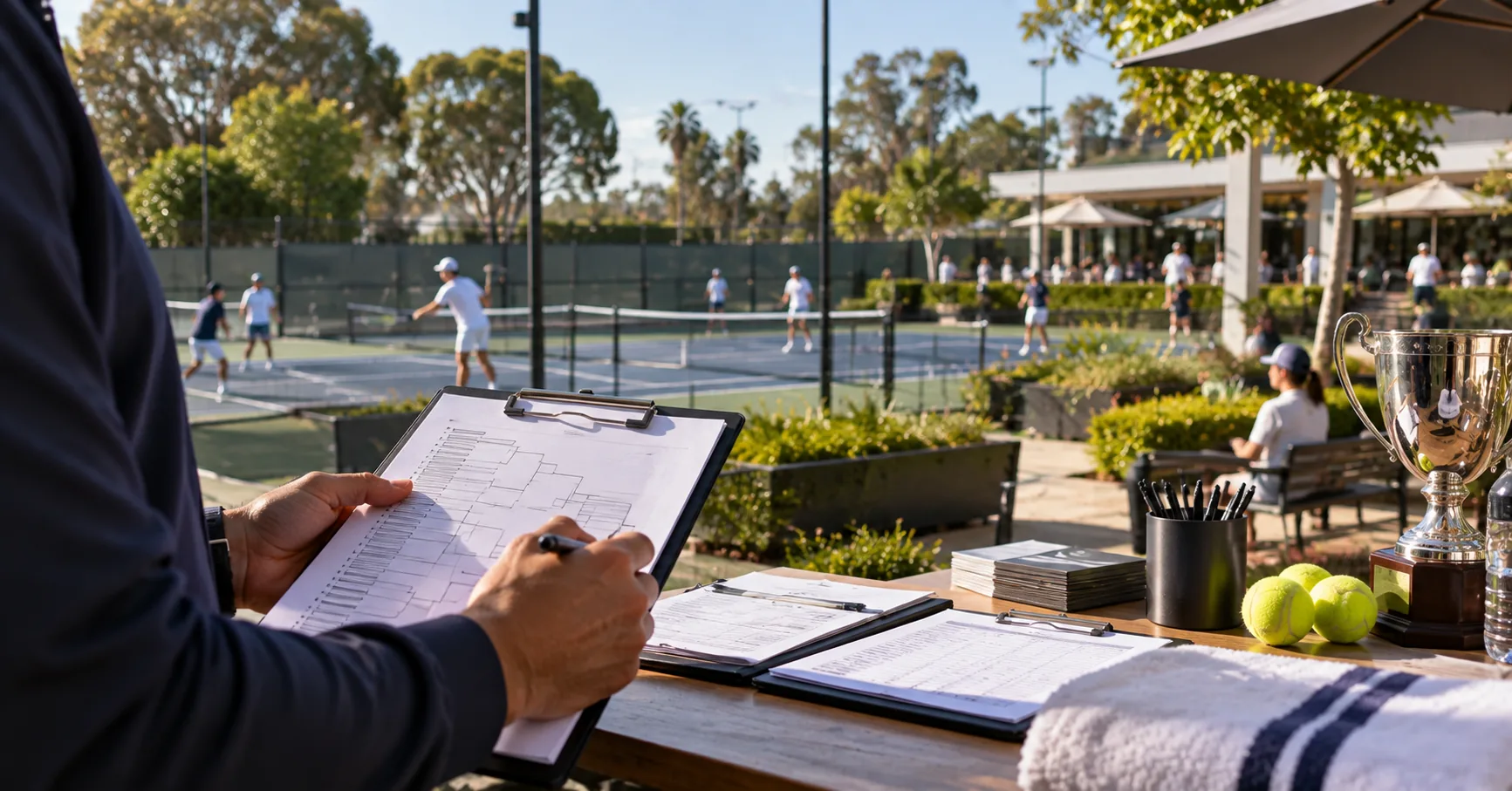
Running a tennis tournament involves much more than putting players into a bracket. From registrations and scheduling to scores, communication, and last-minute changes, there are plenty of details to keep moving.
With the right approach and tools, however, tennis tournament management can become much simpler. The goal is to create an organised competition that works smoothly for both the people running it and the players taking part.
What Is Tennis Tournament Management?
Tennis tournament management is the process of planning, organising, and running a tennis competition from start to finish.
It includes everything that happens before, during, and after the tournament, such as:
- Choosing the tournament format
- Registering participants
- Creating brackets and seedings
- Scheduling matches
- Managing courts
- Tracking scores and results
- Communicating with players
- Handling entry fees
- Updating standings
- Recognising winners and achievements
For a small club competition, these tasks may be manageable manually. But as the number of players and matches increases, keeping everything organised can quickly become challenging.
This is why many clubs are turning to digital tournament management tools to streamline the process.
Why Is Tennis Tournament Management Challenging?
A successful tournament depends on many moving parts working together.
Players have different schedules. Courts have limited availability. Matches can run late. Someone may withdraw at the last minute. Results need to be recorded correctly, and everyone needs to know when and where they are playing.
Without a clear system, organisers can end up spending more time on administration than on the competition itself.
Common Tournament Management Challenges
| Challenge | What It Can Cause |
|---|---|
| Manual registration | More admin work and scattered player information |
| Complex scheduling | Conflicts between players and court availability |
| Manual score tracking | Delayed or incorrect results |
| Multiple communication channels | Missed updates and confusion |
| Spreadsheet-based brackets | Time-consuming manual updates |
| Payment tracking | Extra follow-ups with participants |
| Last-minute changes | Schedule disruptions and additional admin |
The solution isn't simply to work faster. It is to create a process that makes these tasks easier to manage from the beginning.
Start With the Right Tournament Format
Before you begin scheduling matches, decide which format is right for your players and the purpose of the event.
Knockout Tournaments
A knockout tournament gives players a clear route toward the final.
Players advance by winning their matches, while those who lose are eliminated according to the tournament structure.
This format can work particularly well for:
- Club championships
- Seasonal competitions
- One-day events
- Special club tournaments
Round-Robin Tournaments
In a round-robin format, players compete against multiple opponents rather than being eliminated after one match.
This is useful when you want participants to get more playing opportunities.
Box and Ladder Leagues
Not every club competition needs to be a traditional tournament.
Box leagues allow players to compete within groups, while ladder leagues give members opportunities to challenge others and move through rankings.
Matchspace supports knockout tournaments alongside box and ladder competitions, giving clubs different ways to organise competitive play throughout the year.
The right format depends on player numbers, skill levels, court availability, and how long you want the competition to run.
Make Player Registration Simple
Once the format is decided, the next step is getting players into the competition.
A manual registration process can involve emails, spreadsheets, paper forms, and repeated follow-ups. It becomes even harder when organisers need to collect information such as player names, contact details, availability, or entry payments.
Online registration can make this process much easier.
Players can sign up digitally, while organisers have a central list of participants to work from.
A good tournament platform should also make it easy to invite existing club members and keep track of who has joined the competition.
Create Fair Brackets and Seedings
For many tennis tournaments, creating the bracket is one of the most important parts of the setup.
A well-organised bracket gives players a clear understanding of how the competition will progress.
Depending on the event, organisers may need to consider:
- Player rankings
- Previous performance
- Skill level
- Number of participants
- Tournament format
- Seeding requirements
Matchspace's tournament tools include flexible bracket creation and customisable seeding options, allowing organisers to structure competitions around their club's needs.
The key is to establish the rules before matches begin and communicate them clearly to participants.
Simplify Tennis Match Scheduling
Scheduling is often where tournament management becomes complicated.
You need to balance player availability with court availability while keeping the tournament moving at a reasonable pace.
A simple scheduling process should answer three questions:
Who is playing?
When are they playing?
Where are they playing?
Digital tools can make this easier by centralising availability and match information.
Matchspace allows players to provide availability and communicate with opponents through the app, while notifications can keep participants informed about upcoming matches and schedule changes.
This reduces the amount of back-and-forth required from organisers.
A Simple Scheduling Process
- Collect player availability.
- Check available courts.
- Create suitable match slots.
- Confirm matches with players.
- Send reminders.
- Update schedules when circumstances change.
The more of this process you can manage from one place, the easier the tournament becomes to run.
Track Scores and Results in Real Time
Once matches begin, results need to be recorded accurately and quickly.
Traditionally, an organiser might collect scores from players and manually update a spreadsheet or bracket.
That works—but it can become a bottleneck when several matches finish at once.
With digital score tracking, players can submit results directly after their matches, allowing organisers and participants to see updated competition information.
Matchspace supports score submission and real-time standings, helping players follow their progress while reducing manual result tracking for administrators.
Accurate results also help keep the next stage of the competition moving without unnecessary delays.
Keep Tournament Communication in One Place
Good communication can make or break a tournament.
Players need to know about:
- Match times
- Court assignments
- Schedule changes
- Delays
- Results
- Tournament announcements
- Upcoming matches
Using several different communication channels can make things difficult. One player might check email while another relies on a messaging group.
Centralised communication gives everyone a clearer place to find tournament information.
Matchspace includes in-app messaging and notifications, allowing players to communicate directly and organisers to send announcements and updates.
This is particularly useful when something changes at short notice.
Manage Tournament Payments Efficiently
If your tournament has an entry fee, payment management is another task to consider.
Collecting cash or manually checking bank transfers can create additional administration.
A digital payment system can help organisers see who has paid and who still needs to complete their registration.
Matchspace includes online payment and payment-tracking features for competition entry, helping clubs reduce manual fee collection and follow-ups.
For clubs running regular competitions, having registration and payment information connected can make the overall process much more efficient.
Keep Players Engaged Throughout the Competition
Tennis tournament management isn't only about administration.
It is also about creating an experience that makes players want to participate again.
A tournament can become more engaging when players can easily follow results, see their progress, communicate with opponents, and celebrate achievements.
Matchspace includes features such as digital trophies, awards, achievements, and competition wrap-ups that can help clubs recognise players and keep the competitive experience going beyond individual matches.
These features may seem small, but recognition can make a competition feel more rewarding.
Tennis Tournament Management: Manual vs Digital
For clubs considering a move away from spreadsheets and separate tools, the difference can be significant.
| Tournament Task | Manual Approach | Digital Approach |
|---|---|---|
| Registration | Forms, emails, spreadsheets | Online registration |
| Brackets | Manually created and updated | Digital bracket management |
| Scheduling | Messages and spreadsheets | Centralised schedules and availability |
| Results | Paper or manual entry | Digital score submission |
| Communication | Email and messaging groups | In-app communication and notifications |
| Payments | Manual tracking | Online payment tracking |
| Player progress | Separate records | Centralised competition information |
| Achievements | Manual recognition | Digital trophies and milestones |
The purpose isn't to remove the organiser from the process. It is to remove unnecessary administrative work so they can focus on running a great competition.
How Matchspace Helps With Tennis Tournament Management
Matchspace is designed specifically for racquet sports clubs, bringing competition management, communication, and player engagement together.
For club administrators, the platform provides tools to set up competitions, manage participants, schedule matches, track results, handle payments, and oversee tournaments from a central dashboard.
For players, the experience is more connected. They can join competitions, manage match availability, communicate with opponents, submit scores, and follow their progress.
The platform also supports different competition formats, including knockout tournaments, box leagues, and ladder leagues.
That means clubs can use one system for different types of competitive activity instead of relying on separate tools for every format.
Best Practices for Successful Tennis Tournament Management
Technology can make tournament administration easier, but a good process still matters.
Keep these best practices in mind:
Set Clear Rules
Make sure players understand the format, scoring system, deadlines, and progression rules before the tournament begins.
Communicate Early
Share schedules, rules, and important information before the first match.
Keep Results Updated
Don't allow results to build up. Encourage players to submit scores as soon as matches finish.
Plan for Changes
Rain, injuries, court issues, and player availability can affect schedules. Have a process for handling changes quickly.
Think About the Player Experience
A well-managed tournament should feel organised and enjoyable, not confusing. Make it easy for players to find information and understand what happens next.
FAQs About Tennis Tournament Management
What does tennis tournament management include?
Tennis tournament management covers the complete process of running a competition, including registration, format selection, brackets, scheduling, court management, score tracking, communication, payments, and player engagement.
What is the best format for a tennis tournament?
There is no single best format. Knockout tournaments work well for elimination-style competitions, while round-robin formats provide players with multiple matches. Box and ladder leagues are useful for ongoing club competition.
How can technology simplify tennis tournament management?
Tournament management software can centralise registrations, brackets, scheduling, scores, communication, payments, and standings. This reduces repetitive administration and gives players easier access to competition information.
Can players manage their own matches?
Some platforms allow players to communicate with opponents, share availability, arrange match times, and submit results. Matchspace provides these tools through its app, helping reduce the scheduling workload for club administrators.
How can clubs keep players engaged after a tournament?
Clubs can use rankings, achievements, digital trophies, competition wrap-ups, and follow-up competitions to encourage continued participation. Recognition and regular competitive opportunities can help build a stronger club community.
Make Tennis Tournament Management Simpler
A successful tennis tournament requires good planning, clear communication, accurate results, and plenty of coordination. When all of these tasks are handled manually, organisers can quickly become overwhelmed.
The right approach—and the right tools—can make a big difference.
From choosing a tournament format and registering players to scheduling matches, tracking scores, collecting payments, and celebrating winners, tennis tournament management becomes much easier when everything is organised in one place.
Matchspace helps racquet sports clubs manage competitions while keeping players connected and engaged. With tools for knockout tournaments, box leagues, ladder leagues, scheduling, results, communication, payments, and player achievements, clubs can spend less time on administration and more time building an active competition community.
Ready to simplify your next tournament? Explore Matchspace and see how a centralised competition platform can help your club run smoother, more engaging tennis events.